Semantic Email Intelligence
A Second Brain for your Emails
Product DesignEmail workflows today are defined by cognitive overload and information retrieval friction. We spend significant mental effort sorting through noise to find what matters. Semantic Email Intelligence conceptualizes a shift from message lists to a knowledge-driven interface.
The design explores how semantic understanding can transform the inbox into an organized system that surfaces relevant context at the right time. By imagining a future where AI supports decision-making rather than replacing user agency, the proposal aims to reduce the mental load of managing digital communication.
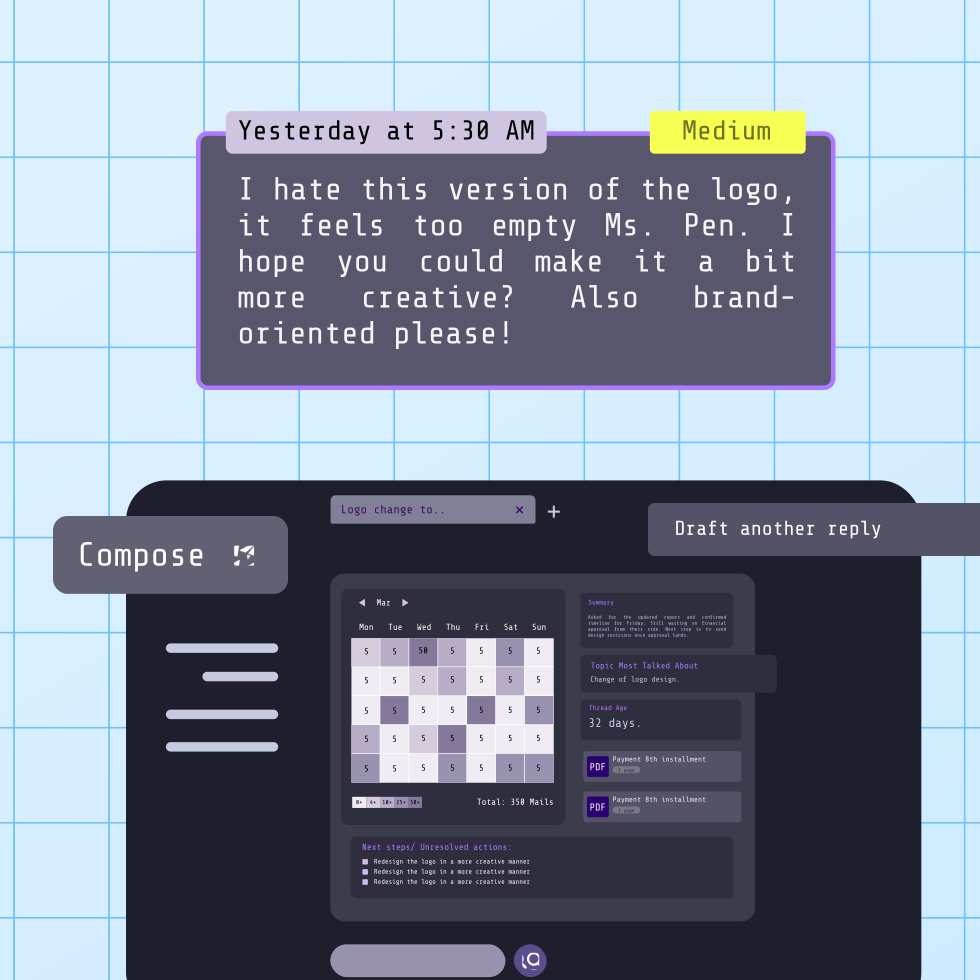
Intelligent Discourse
The proposal imagines an interface that goes beyond text to understand underlying context and sentiment. The design is intended to surface key signals and summarize complex threads into actionable insights, helping users maintain continuity across long conversations.
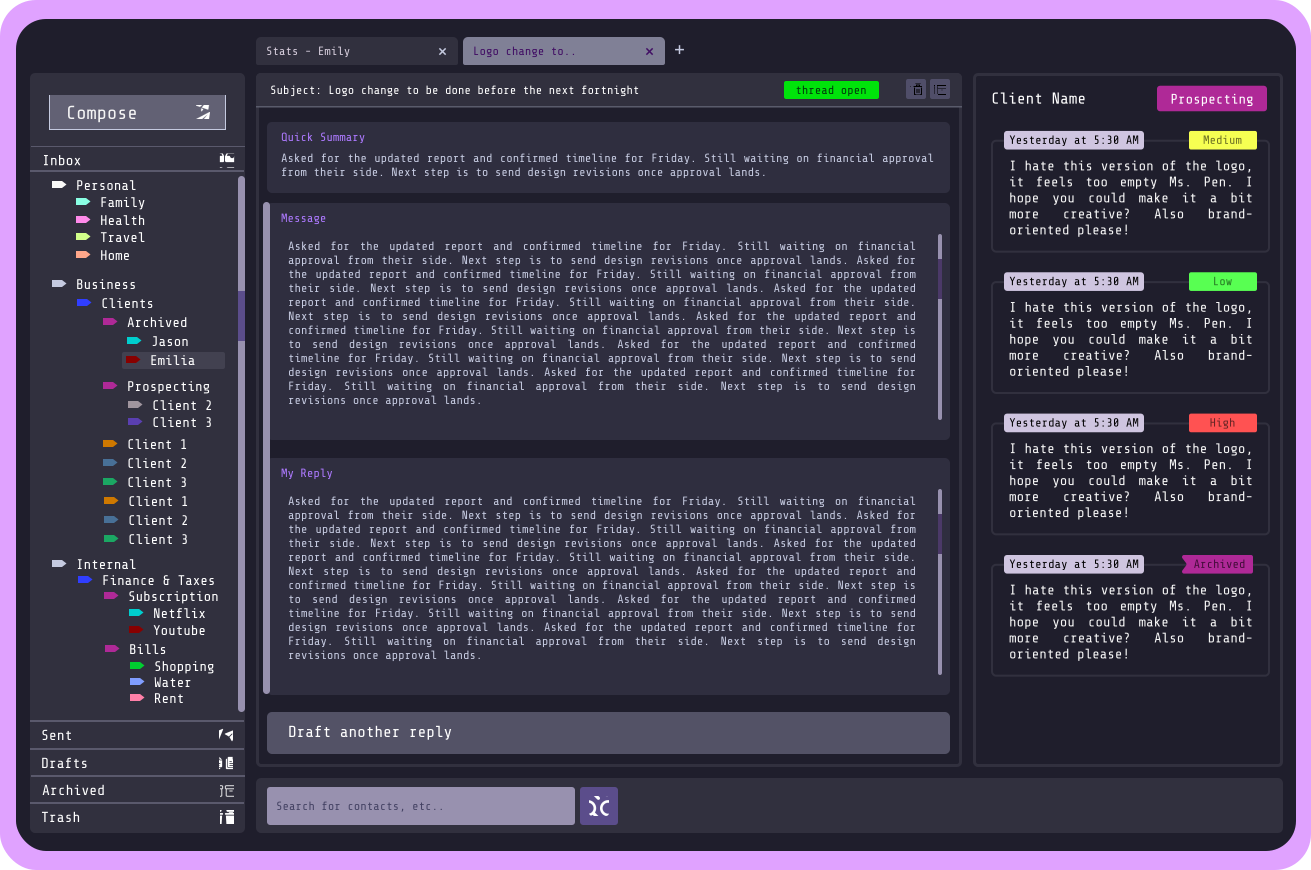
Predictive Intelligence
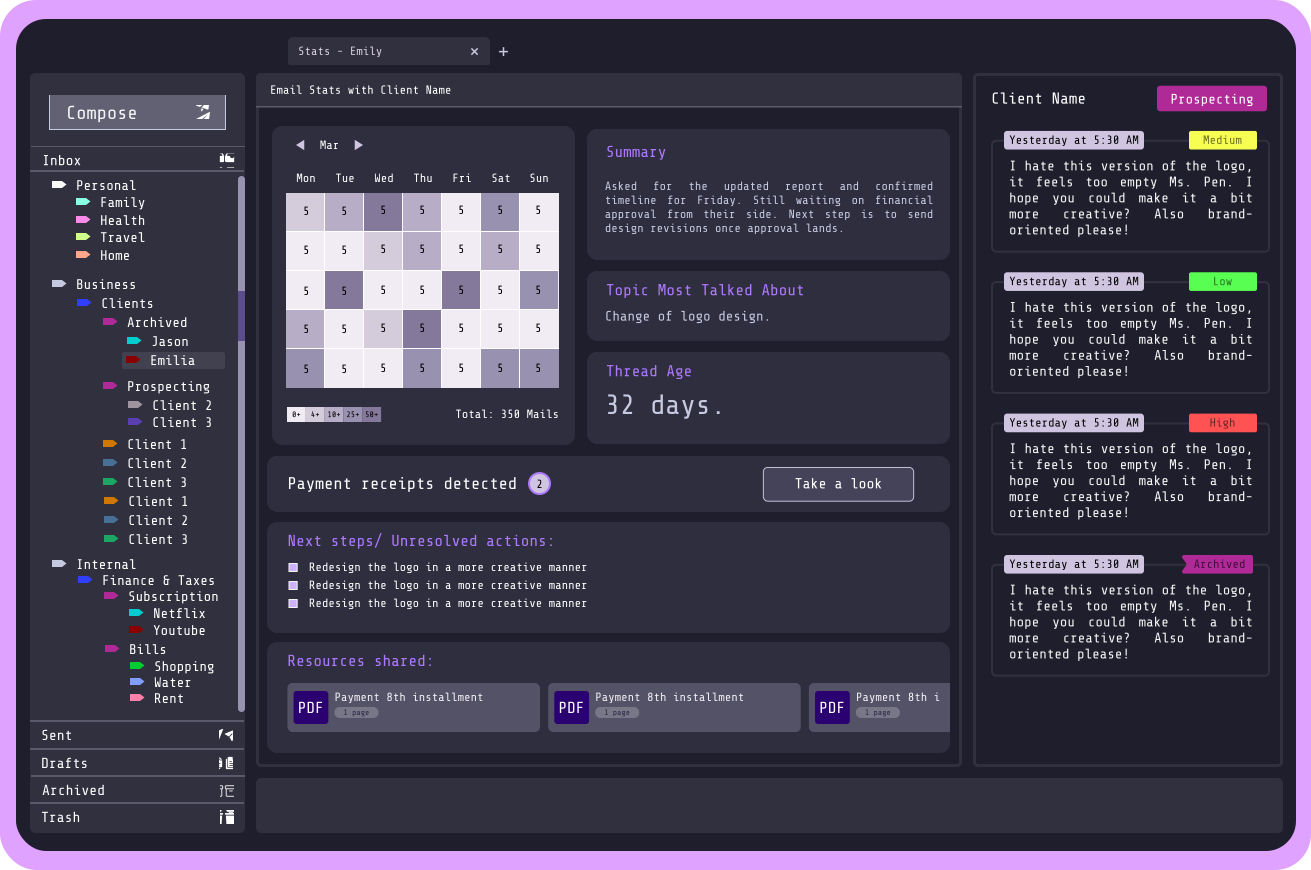
Inbox management designed around prioritization. The concept proposes visualizing behavior to predict reply urgency, aiming to surface potential blockers before they impact flow. This design problem focuses on communicating confidence levels to the user without overwhelming the interface.
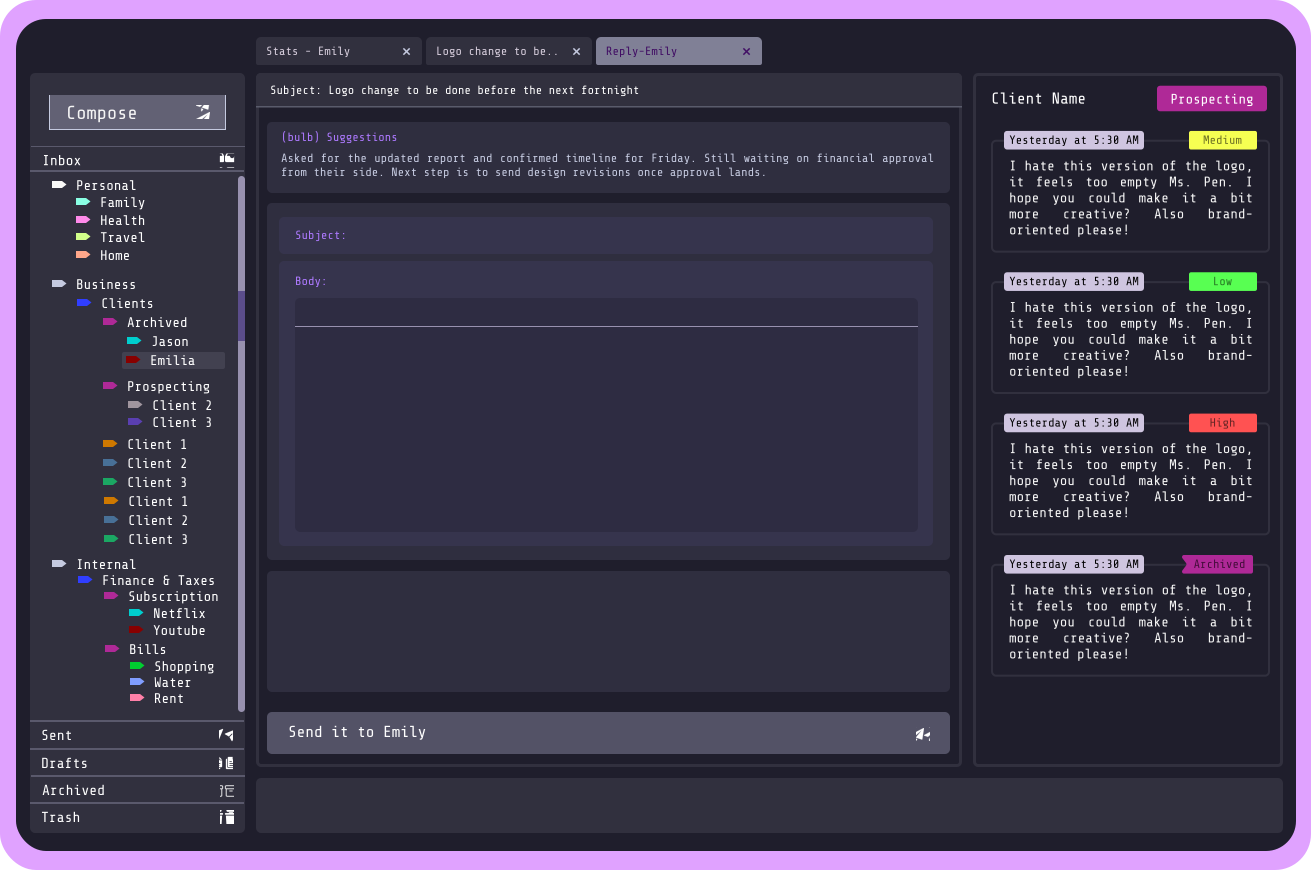
Cognitive Composer
An AI-native writing environment conceptualized to align with user tone. The design aims to support drafting responses through calibrated personalization, solving the trust design problem inherent in automated communication.
Meaning-Based Retrieval
Instead of keyword matching, the design proposes a retrieval experience based on semantic embeddings. This aims to simplify the user's mental model by allowing information access through conceptual similarity and intent mapping.
Smart Partitioning
The design imagines grouping communication by conceptual intent rather than rigid folders. The link between conversations, tasks, and follow-ups is intended to be surfaced contextually to support intuitive thinking and faster decision-making.
Privacy as Trust
Data ownership is framed as a core UX principle. The architectural intent ensures that processing is designed with user control at the center, building trust through transparency and secure memory-based ephemeral workflows.
This design exploration imagines how a shift in perception from email as a task to email as a knowledge system could redefine our relationship with digital communication.