What if the web felt as native as your command line? Terminal Browser explores a future where web browsing is stripped of visual noise and distilled into a purely functional text-based experience.
This concept imagines a workflow where developers can access documentation, research, and technical articles without breaking their terminal stream. By conceptualizing the web as structured text, the design aims to reduce the cognitive load associated with modern graphical browsers while prioritizing speed and focus.
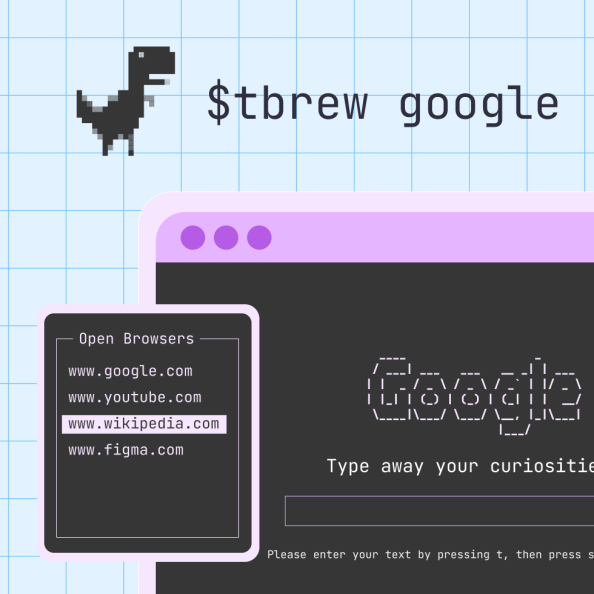
Visual Identity
The Terminal Browser explores a strictly minimalist aesthetic, seeking to combine retro terminal vibes with modern interaction patterns.
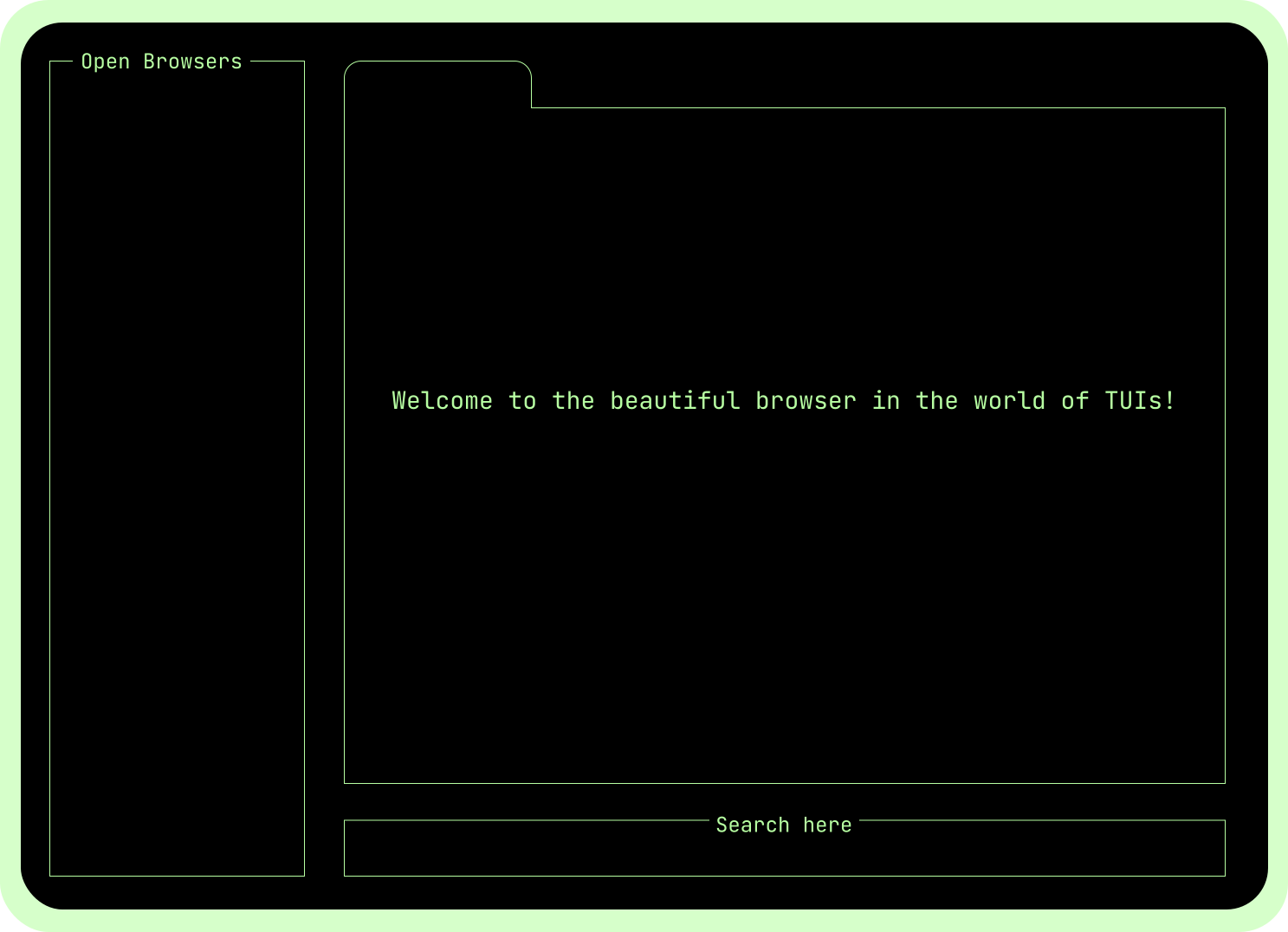
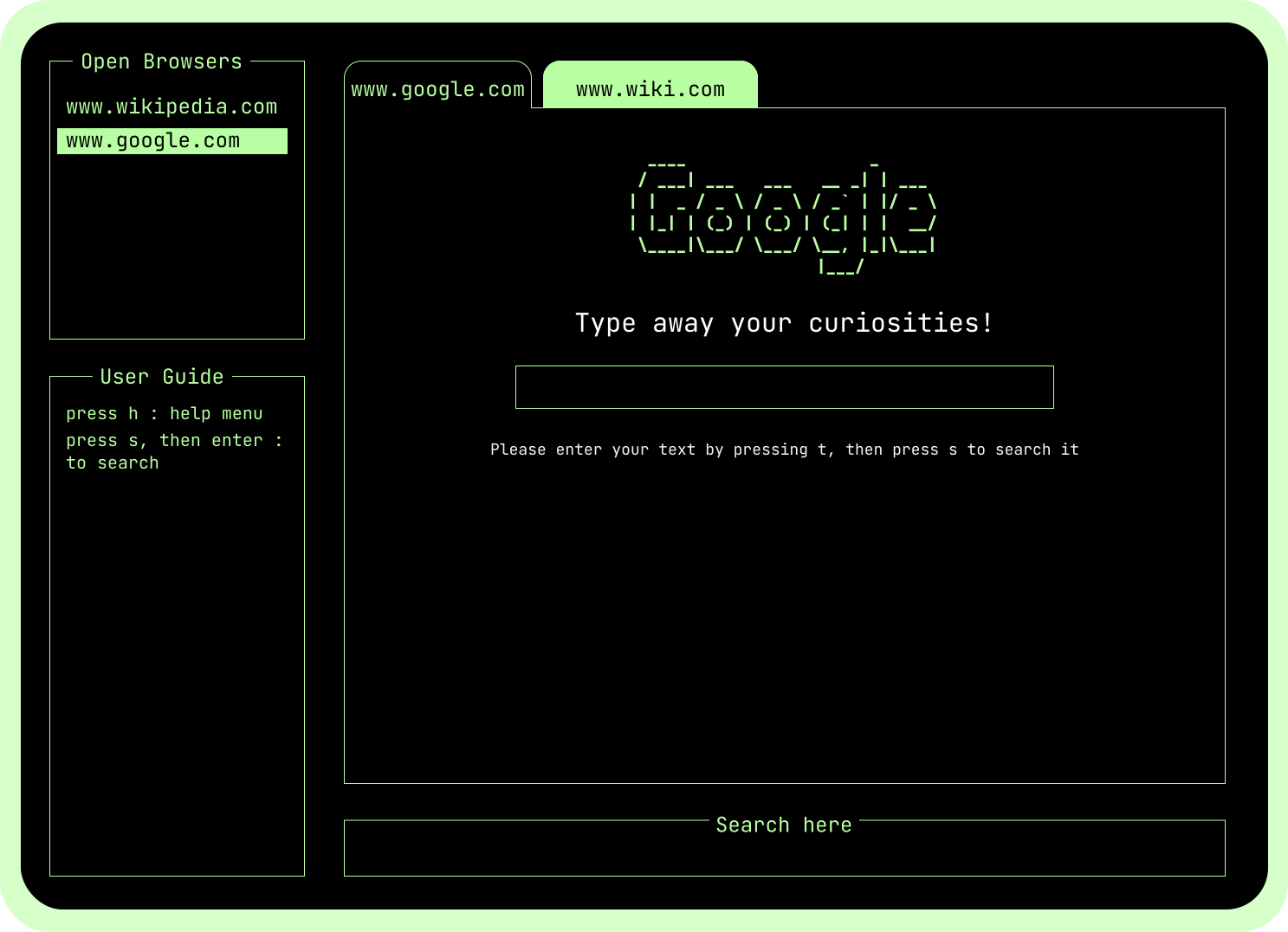
Multi-Tab Experience
The design aims to handle multiple simultaneous sessions with ease. The concept proposes using the↑ Up and↓ Down arrow keys to switch between open tabs as conceptualized in the preview below.
Adaptive Theme Ecosystem
Personalization is core to the terminal experience. The system proposes a variety of high-contrast, carefully curated themes designed to adapt to specific developer environments and creative workflows.
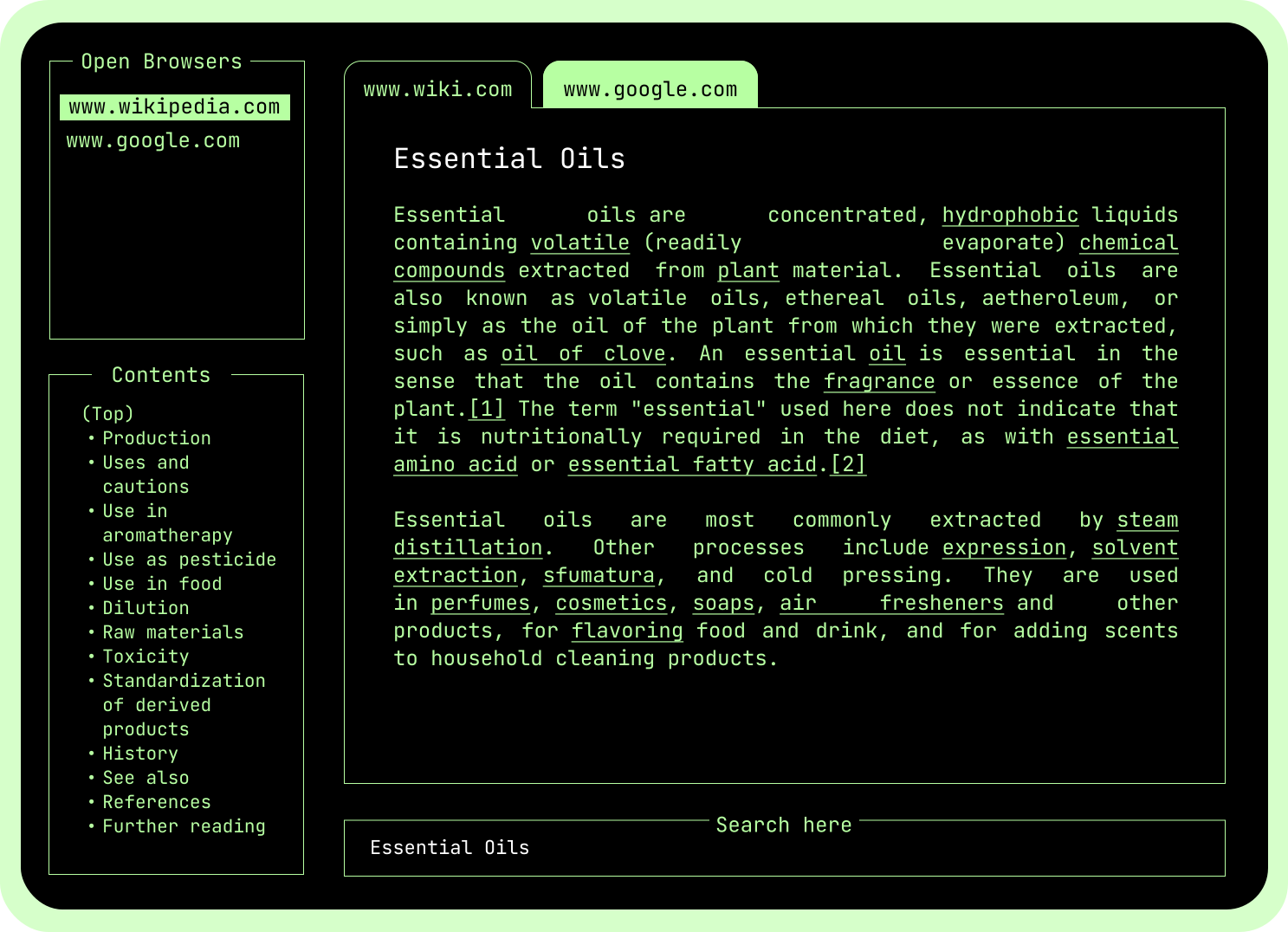 Emerald Green
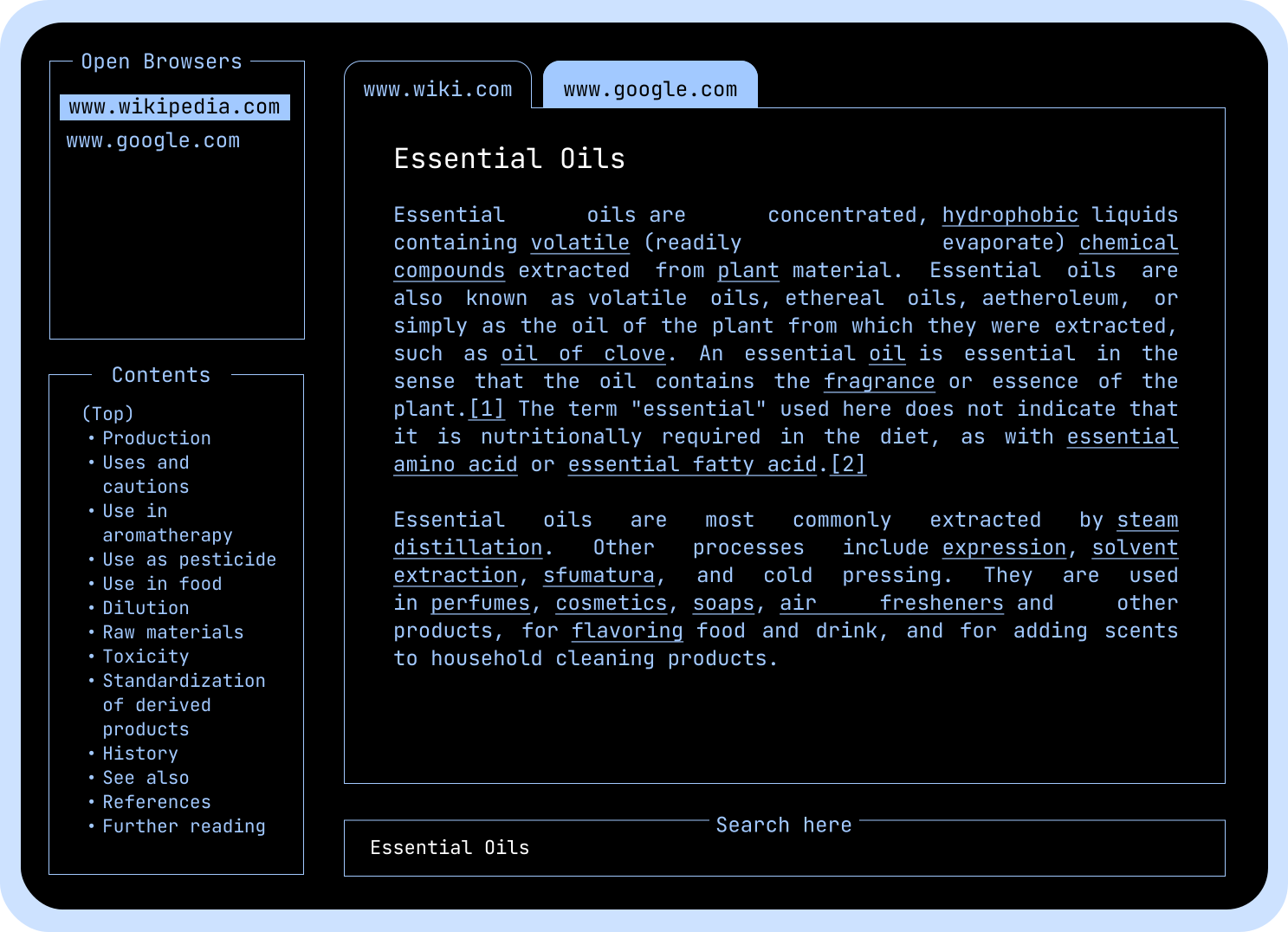 Ocean Blue
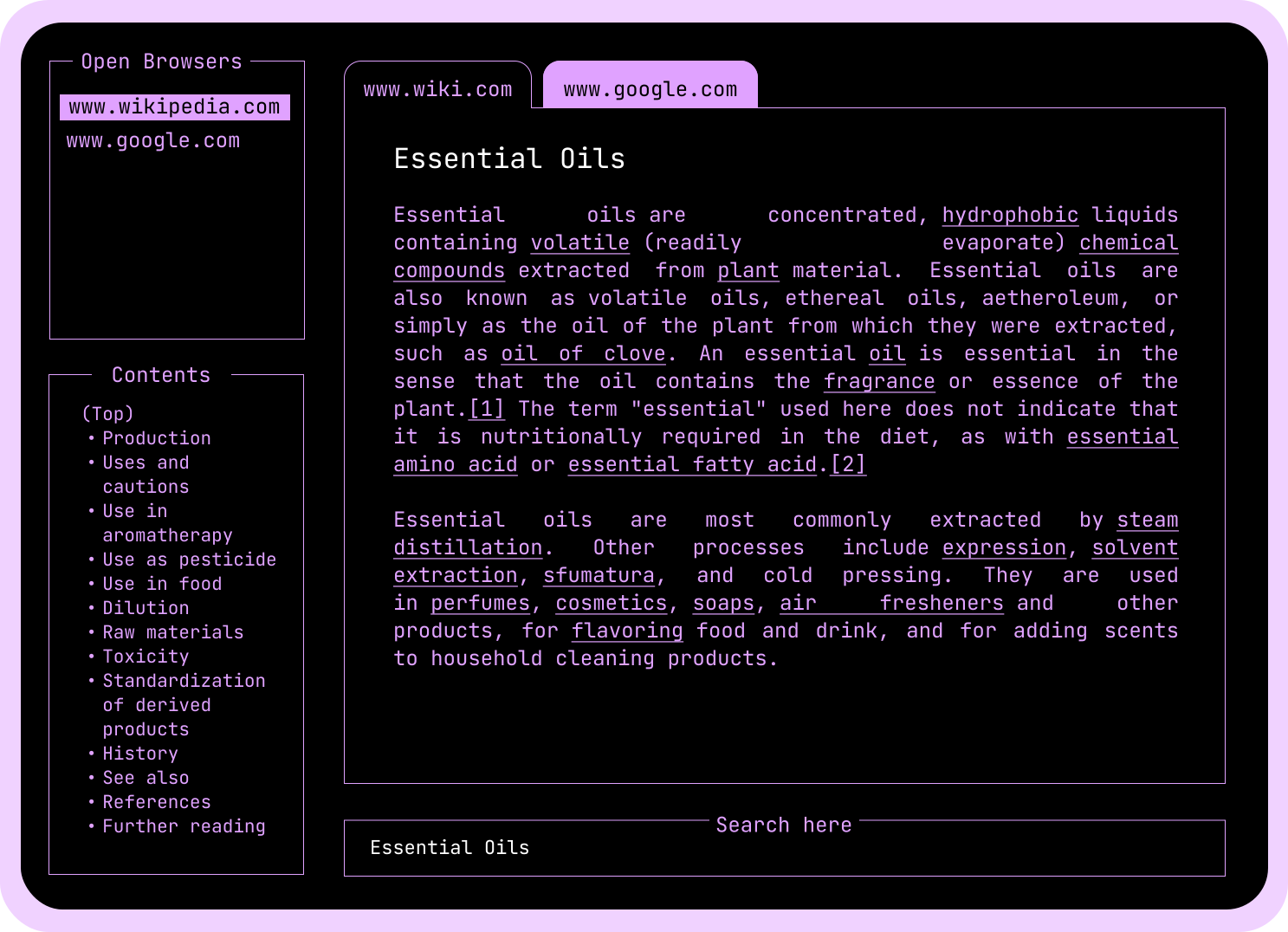 Mystic Purple
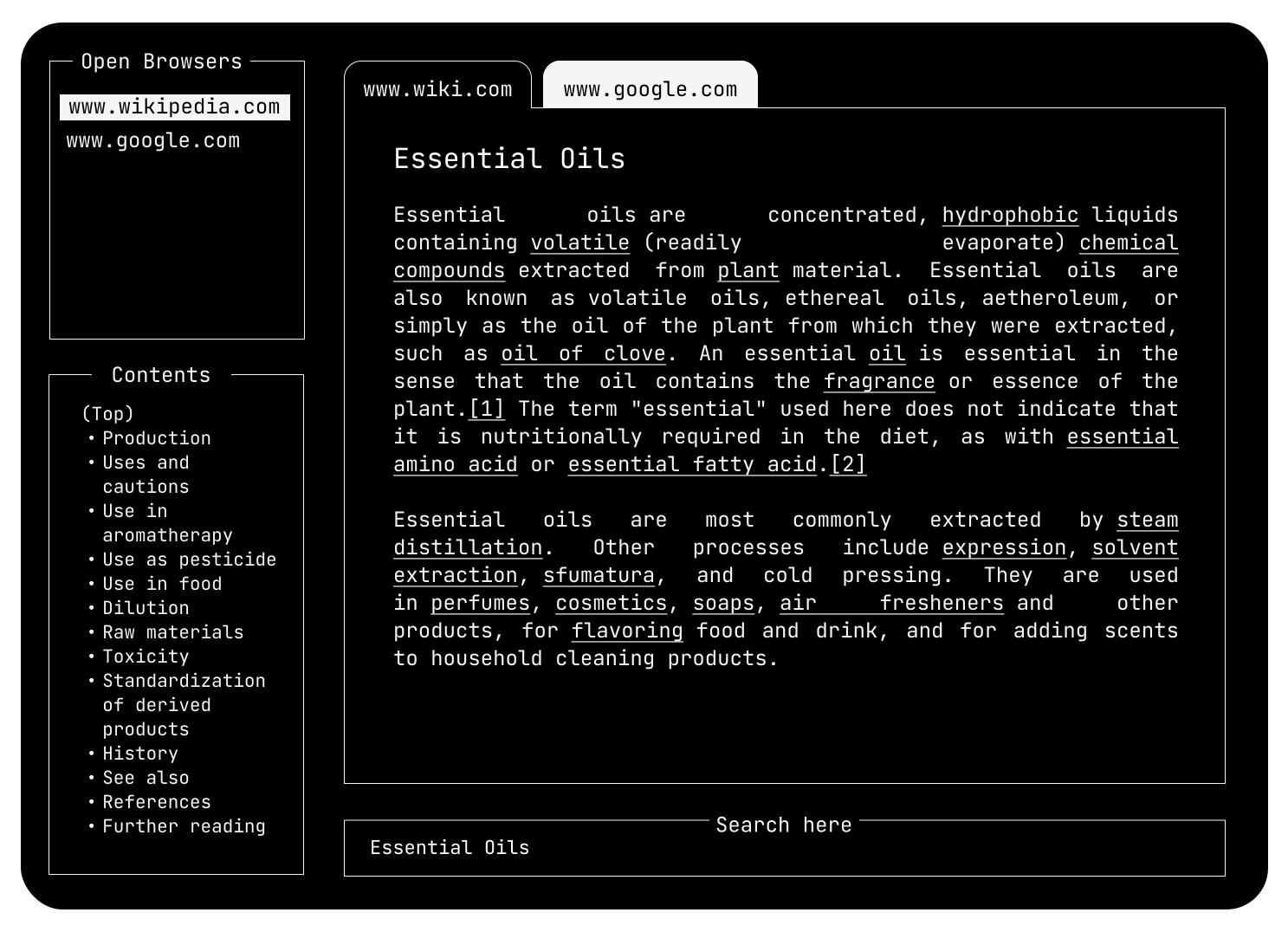 Soft White
Rendering Intent
The concept proposes a pipeline designed to translate complex HTML and CSS into clean, terminal-adaptive output. The architecture aims to support block elements and inline formatting while ensuring the layout remains readable across varying terminal dimensions.
Keyboard Native UX
Interaction design centers on keyboard-first logic. By proposing vim-style bindings and shortcut-driven navigation, the interface aims to eliminate the friction of mouse dependency, allowing for a seamless transition between coding and browsing.
Cognitive Efficiency
The minimal interface philosophy is intended to shield the user from the attention-grabbing patterns of the modern web. The design focuses on content hierarchy, aiming to surface relevant information while hiding distractions like ads and complex layouts.
Terminal Browser is an exploration into how browsing could feel when constrained by the terminal environment. It conceptualizes a world where the interface disappears, leaving only the information and the user's intent.