I wanted a space that felt personal — somewhere I could write about things I'm learning, projects I'm building, and ideas I'm exploring. Most blogging platforms felt too generic, so I built my own from scratch with a focus on reading experience and minimal design.
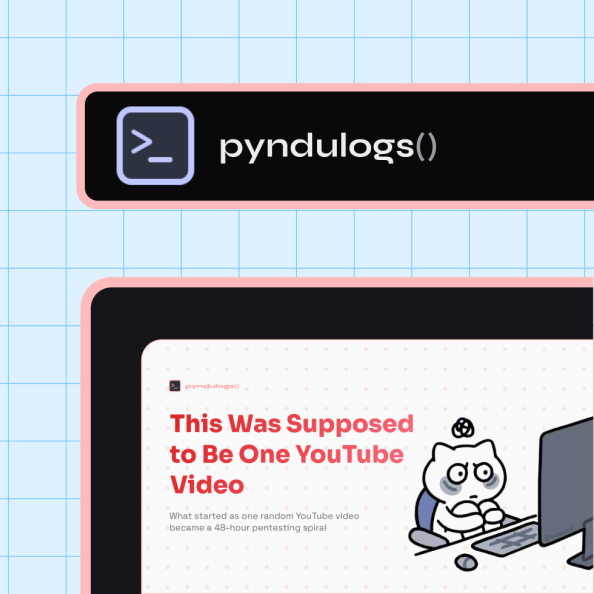
Design
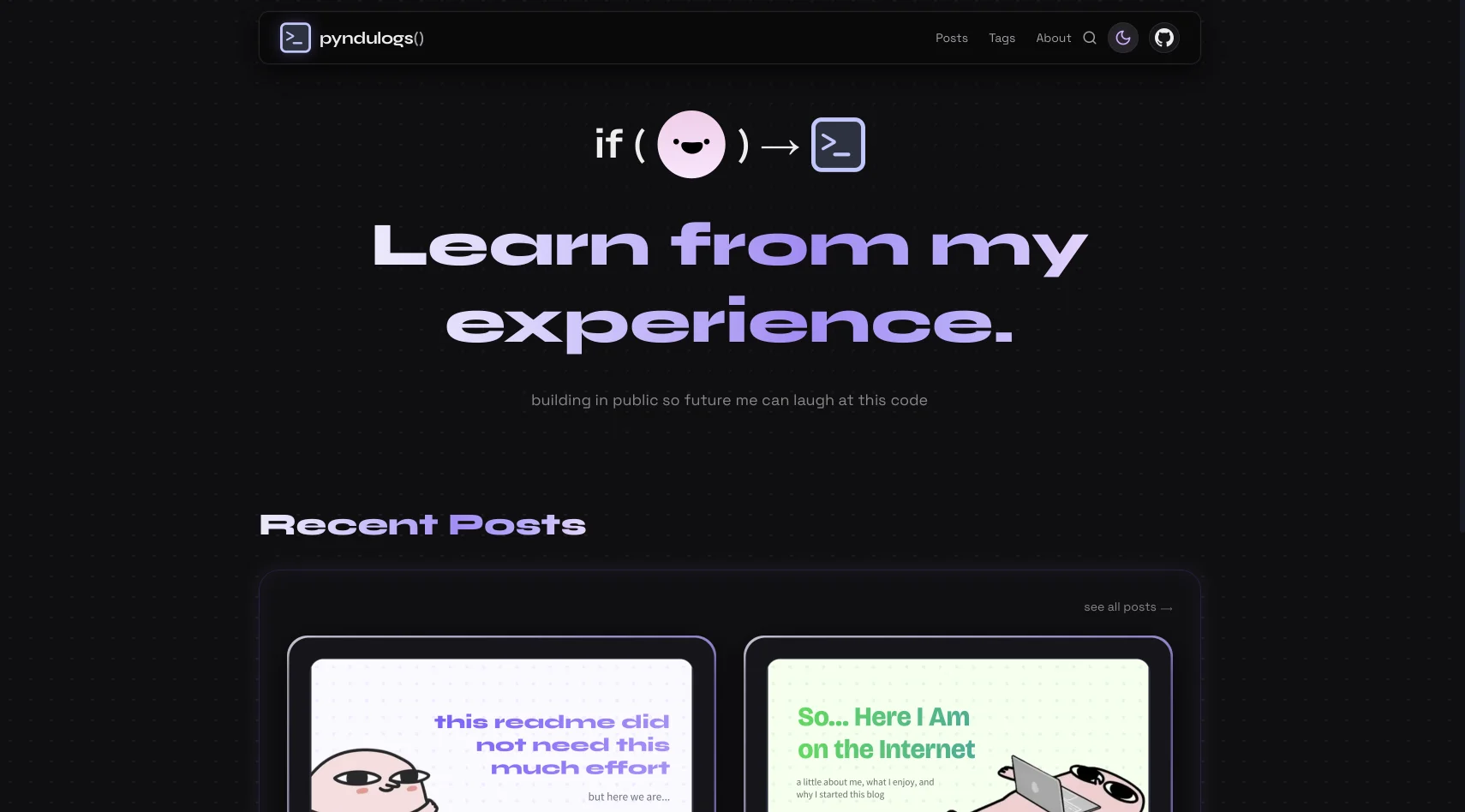
Reading Experience
Designed for focus and clarity. The interface adapts to provide the best reading environment for long-form content.
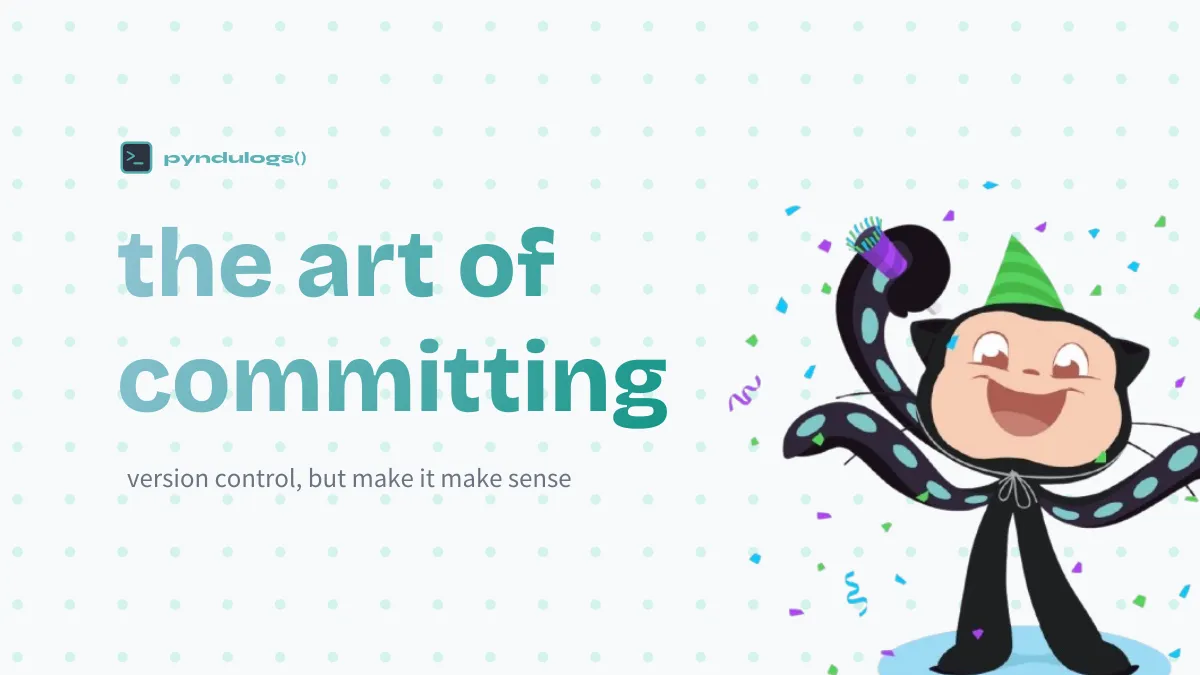
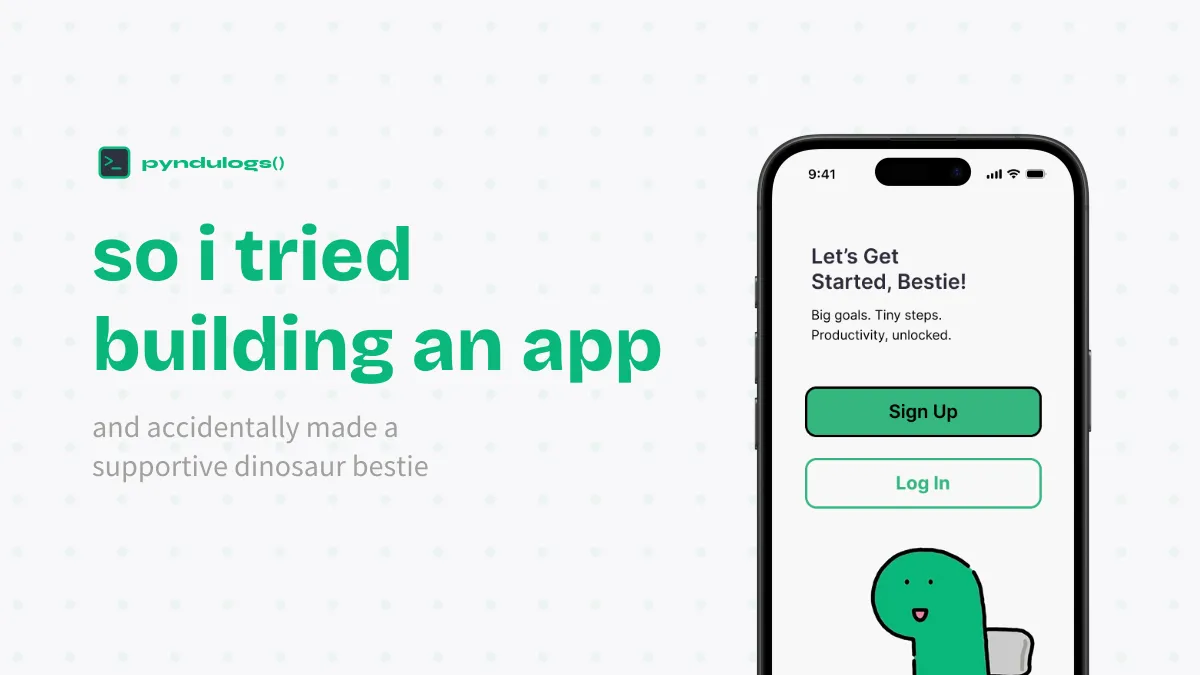
Dynamic Article Covers
A set of uniquely designed vibrant covers crafted to capture attention and set the energetic mood.


Color Palette
Carefully selected thematic colors that evoke a soft but vibrant energy, preventing eye strain during long reading sessions.
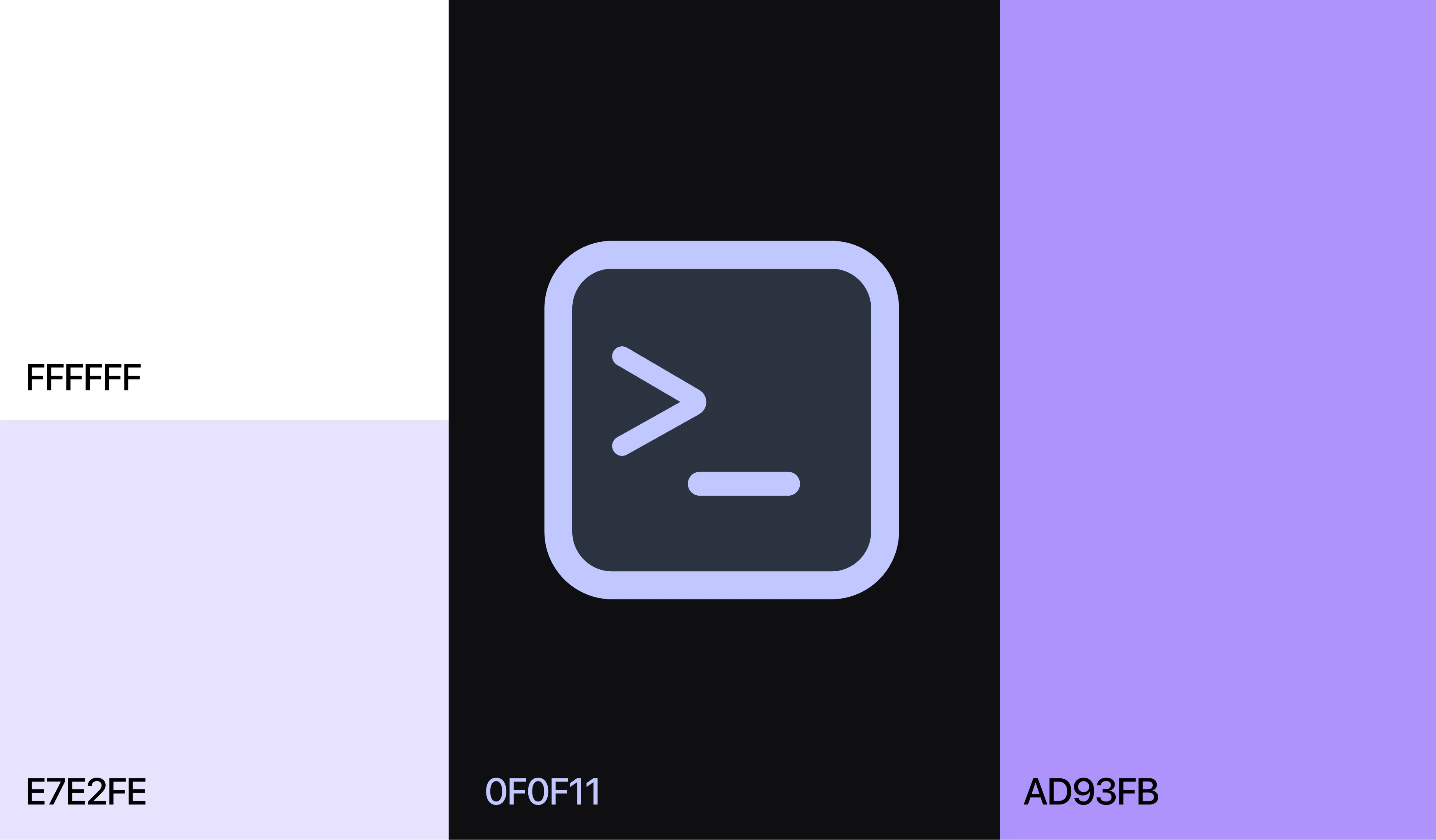
Textured Backgrounds
Subtle background textures add depth and warmth, helping combat pure white harshness while keeping the content feeling grounded.

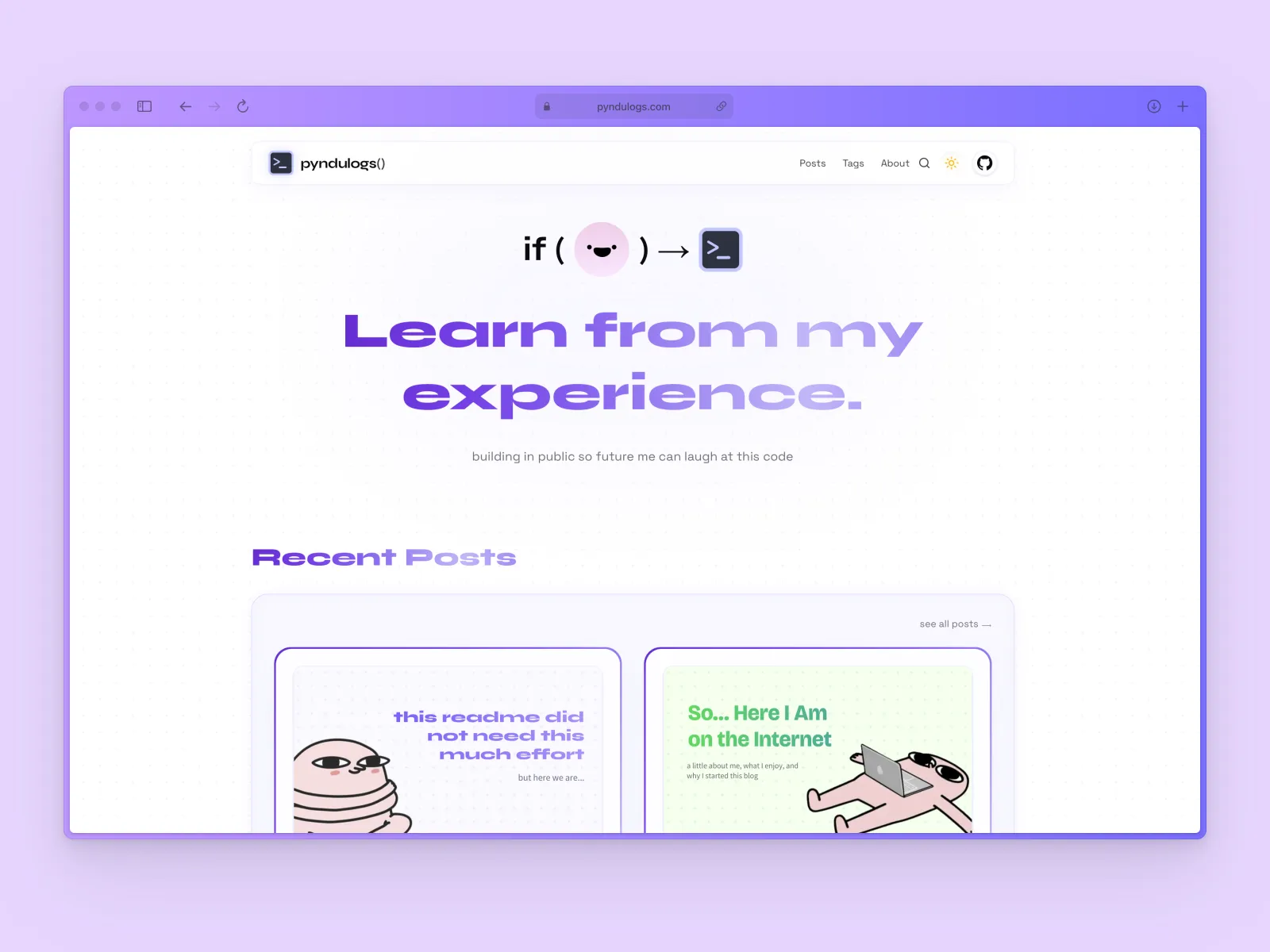
Light Mode
A crisp, airy feel designed for daytime reading, ensuring high legibility and an inviting atmosphere.
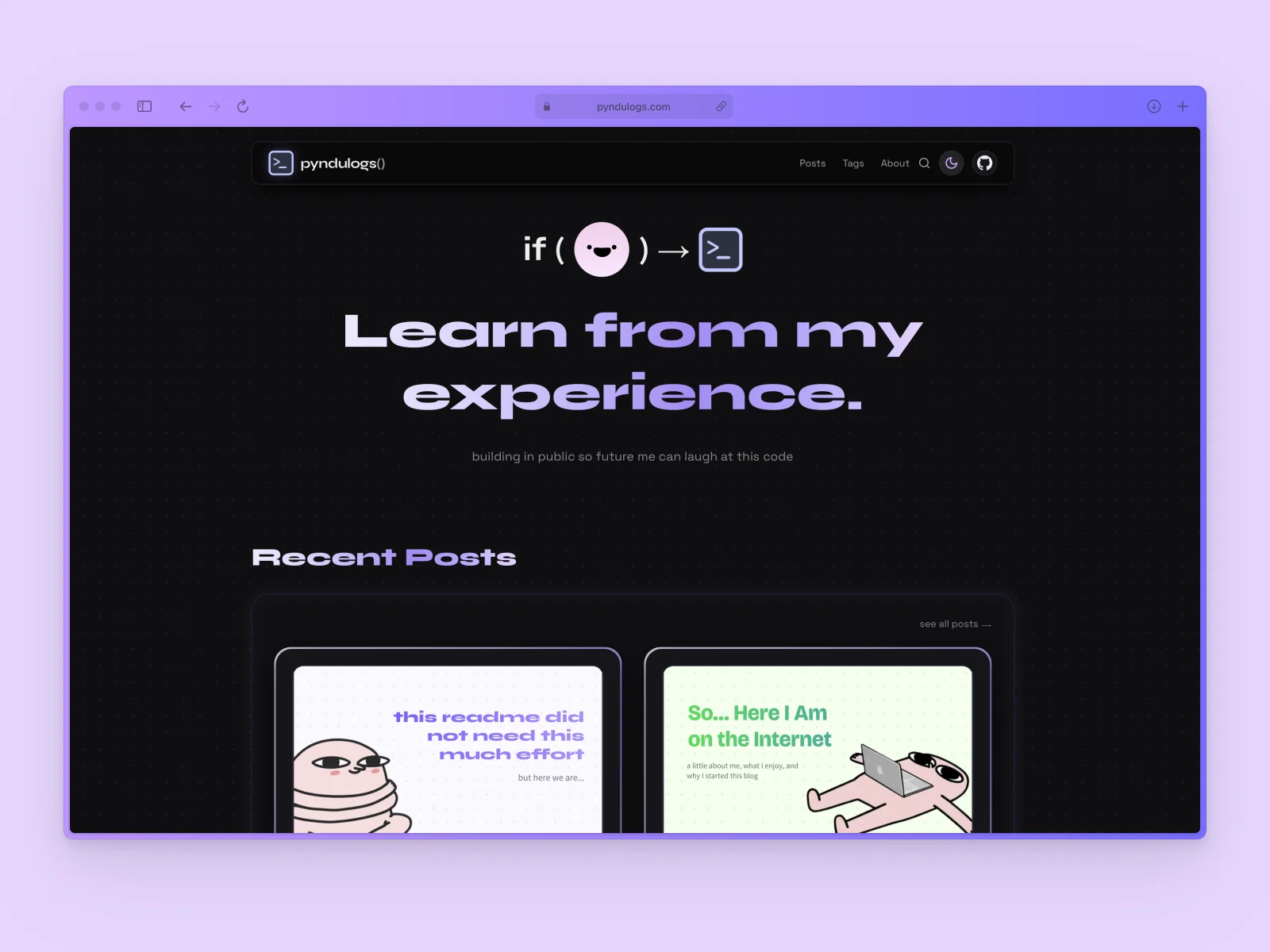
Dark Mode
A carefully crafted dark theme that reduces eye strain while maintaining vibrant accent colors for late-night focus.
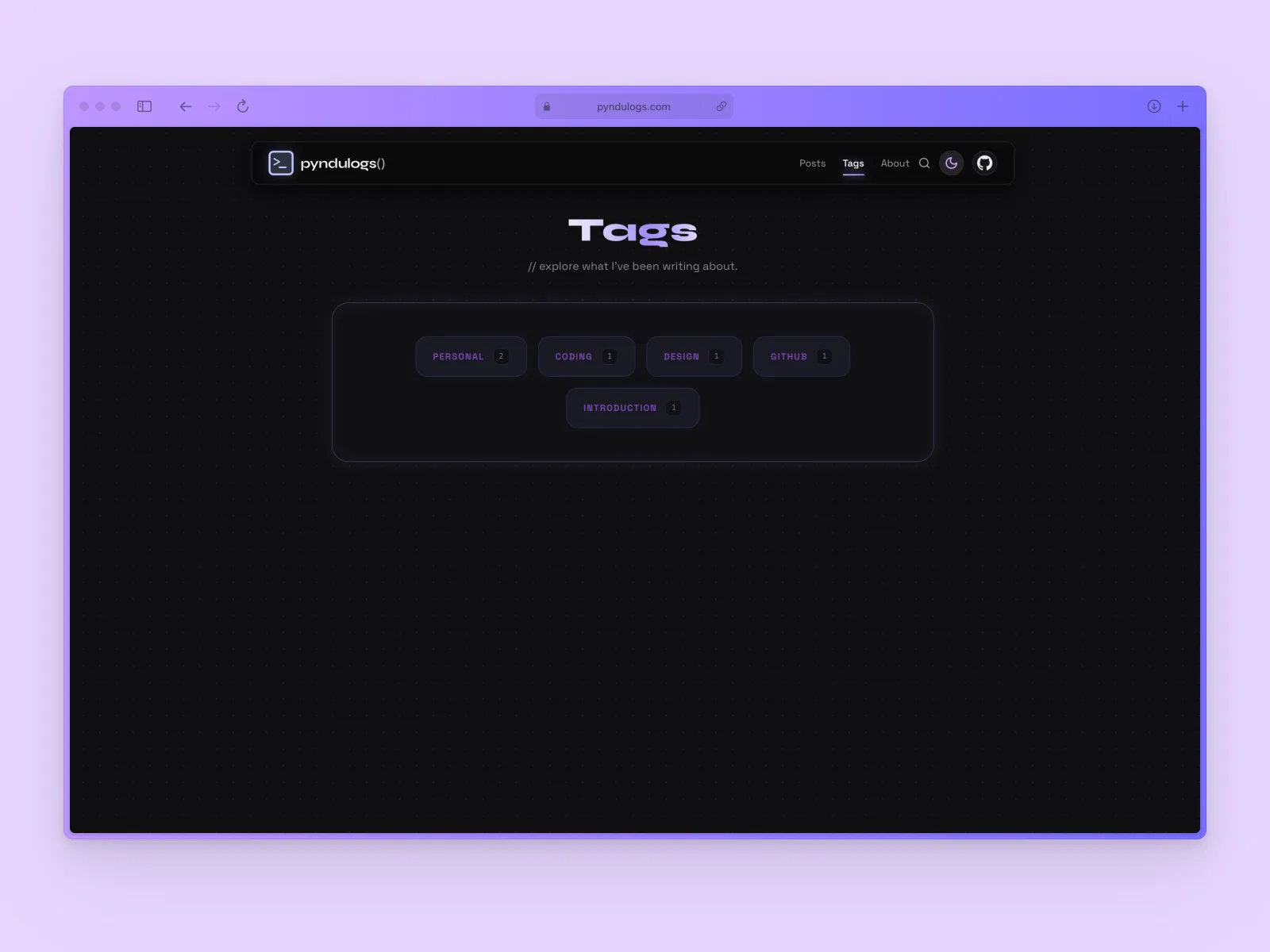
Categorization with Tags
Posts are organized with intuitive tags, making it easy to navigate through specific topics and technical deep-dives.
All Posts Archive
A comprehensive archive of all writing, designed for quick scanning and easy discovery of past content.
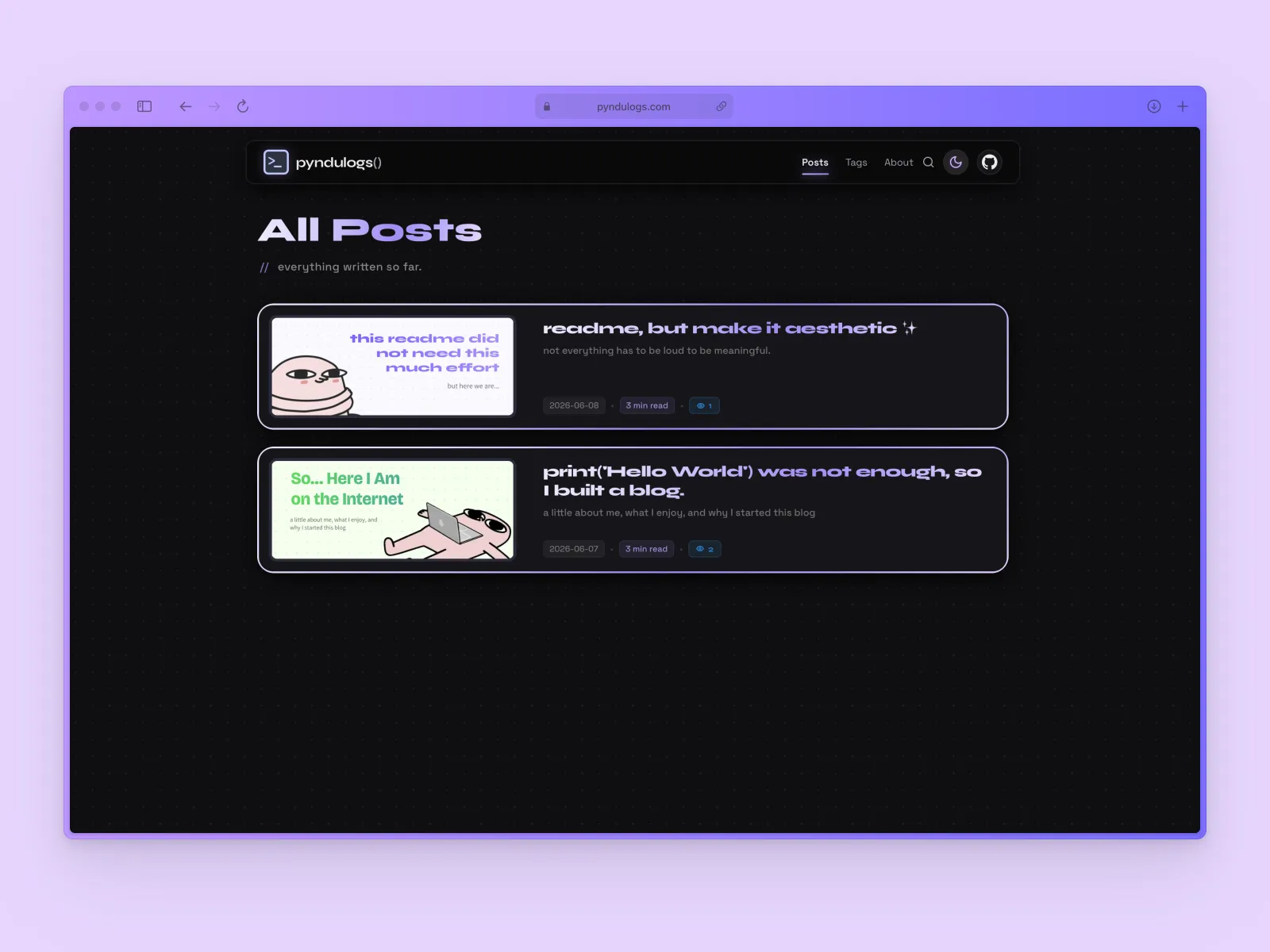
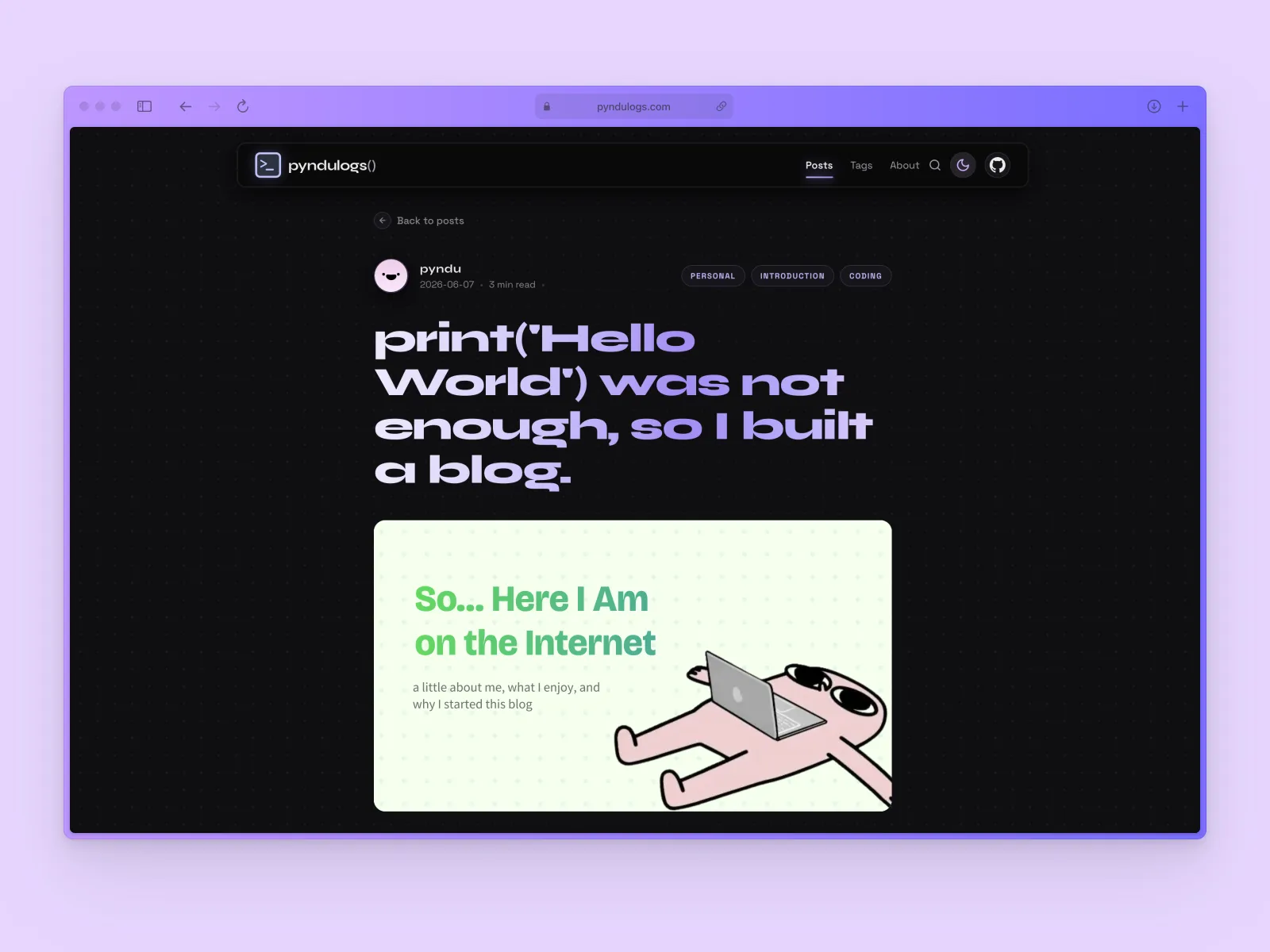
Blog Details Page
A clean, distraction-free reading experience for individual blog posts, ensuring maximum legibility.
Build
Local MDX Content Pipeline
Posts live as local MDX files — no external CMS, no API calls, no rate limits. Each file is co-located with its metadata via frontmatter. At build time, Next.js reads and compiles them directly, so the content is always in sync with the codebase. Total ownership, zero dependency on third-party services.
Engagement Without a Backend
Views and likes are tracked in real-time using Supabase. Each post has its own row — the like action is debounced client-side and written directly to the Supabase table via a lightweight API route. No auth required. It just works, quietly, in the background.
Static Generation + ISR
Every post page is statically generated at build time using Next.js. For new posts, Incremental Static Regeneration kicks in — pages revalidate in the background without a full rebuild. This gives blog-speed load times with near-zero cold starts, even as the content grows.
Read my latest post
Check out the post →
This blog is a living project — actively written, designed, and engineered. It's where I work on writing clearly about technical topics, which is honestly one of the hardest skills in software engineering.